

It is actually just custard
⚠️ WARNING: This recipe uses of raw egg yolks.
STC-Hub is not responsible and assumes no liability for any illness associated with the consumption of raw or undercooked eggs. Those concerned about food safety may substitute the raw egg yolks with pasteurized egg yolks.
On this episode of Cooking with Neri, we learn how to make a unique Vietnamese style coffee, cà phê trứng ( egg coffee ).
Unlike other recipe sites, I am going to jump right to the recipe and skip the long introduction and backstory. If you want to learn more about the coffee, you can read all about it at Savour The Pho.
🛠️ Tools
- Kitchen Scale
- Small bowl or cup
- Larger bowl
- The small bowl/cup should fit in this bowl
- Whisk
- Vietnamese Phin Filter
- For brewing the coffee
- Not required if using pre-brewed coffee
🛒 Ingredients
The coffee
- 10 to 15 g of ground coffee
- 100 to 150 ml of water
OR
- 150 ml of brewed coffee
The egg
- 2 egg yolks ( ~30 g for those using the pasteurized egg yolks )
- 10 to 15 g of condensed milk
- 3 g of vanilla extract
👩🍳 Process
Prepare the egg yolks
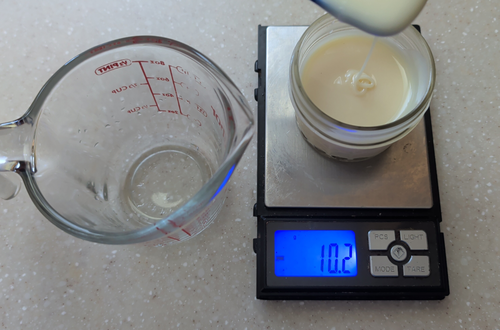
- Add ~10 g of Condenssed milk to the small bowl/cup.
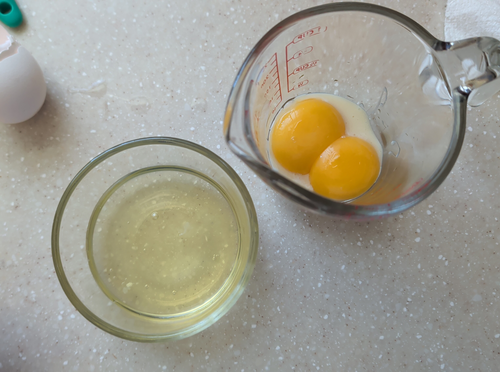
- Separate the egg whites and yolks. The yolks go into the bowl/cup with the condensed milk.
- Save the egg whites in a separate bowl and use them for an omelet.
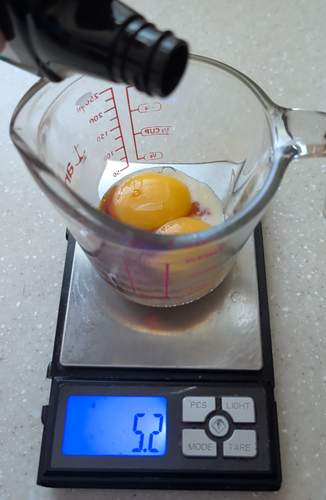
- Add 3 g of vanilla extract to the bowl/cup with the egg yolks and condensed milk.
If brewing the coffee
You can skip this step if you are using pre-brewed coffee.
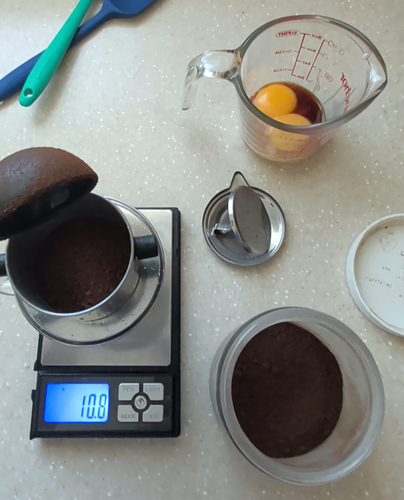
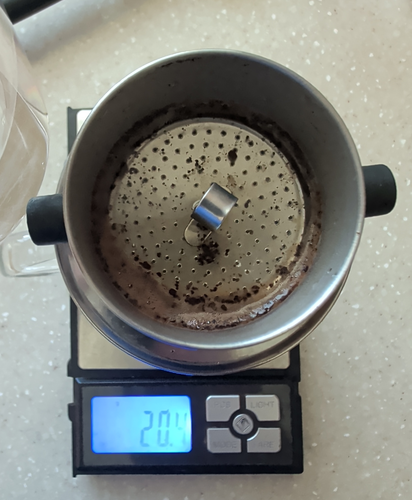
- Add 10 to 15 g of ground coffee to the Phin filter vessel.
- Place the gravity spreader into the Phin filter vessel.
- Depending on the corse-ness of the coffee, you may want to press and twist the gravity spreader a little to pack the grounds down.
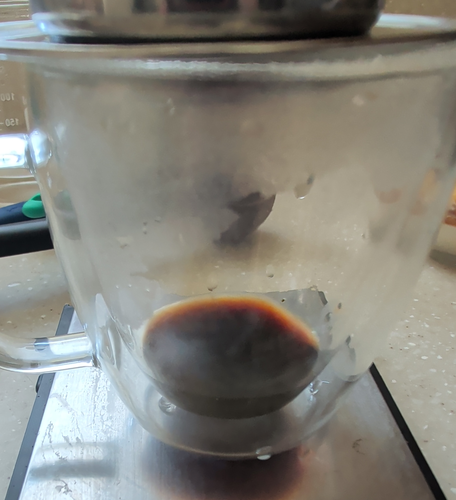
- This requires the most trial and error when using the Phin filter. The goal is to allow the water to drip into the mug over 6 to 8 minutes.
- If it is too fast, the coffee will be weak and light.
- If it is too slow, the coffee will taste stale and bitter.
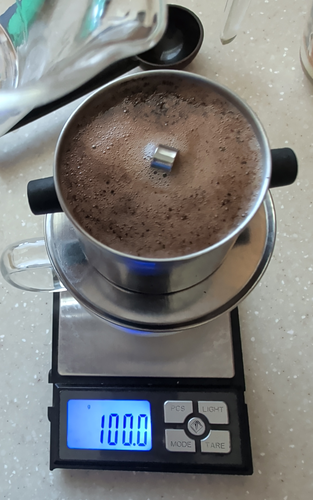
- Bloom the coffee by gently pouring 10 to 20 g of boiling water into the Phin filter vessel. You can add more water as it is absorbed by the coffee if needed.
- During this step the coffee grounds will expand and release CO2.
- Fresh coffee will release more CO2, and it may flip the gravity spreader, so keep an eye on it.
- If it starts to tip over, gently push the spreader back into place, but be careful not to press it down.
- After 1 or 2 minutes, slowly and gently fill the vessel with hot water.
- Do not add more water as it filters through. The phin vessels are designed to hold just the right amount of water.
- Adding more water will extract the bitter unpleasant flavors from the coffee, and the taste will not be as good.
- Rule of thumb: is to use a 10:1 water-to-coffee ratio.
- Set it aside to allow the coffee to brew. While we move on to whisking the egg yolks.
Whisk the egg
If you are using raw egg yolks, the next few steps show how to lightly pasteurize or sous-vide the yolks so they are safer to eat.
It is important to note that this will not guarantee all harmful bacteria are killed, and it may lightly cook the yolks, changing the texture of the end product.
- If you are using raw egg yolks, add water to the larger bowl and bring it to a boil.
- I recommend using the hot water bath while whisking the yolks regardless of using raw of pasteurized eggs. It helps to reduce the strong eggy smell and flavor.
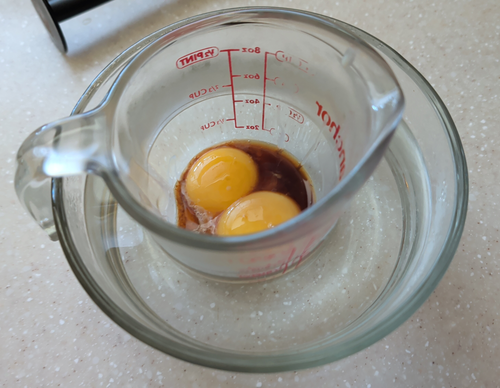
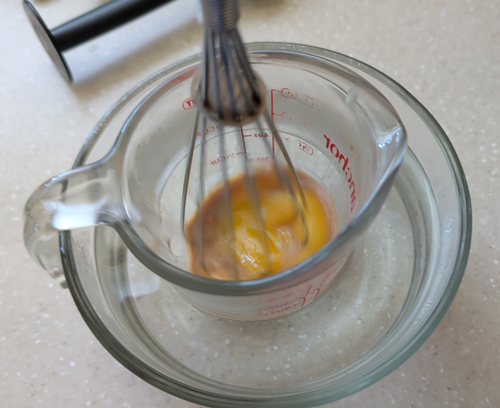
- Place the cup/bowl with the egg yolks into the bowl of boiling water.
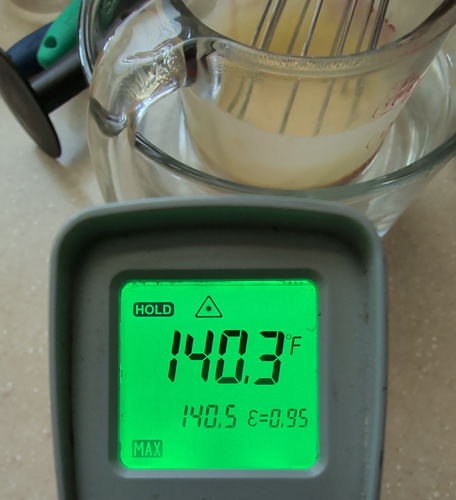
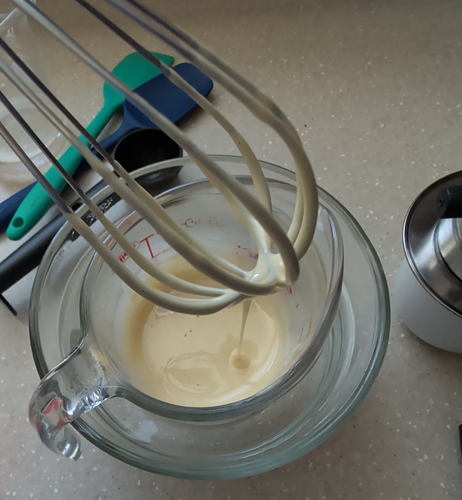
- Whisk the eggs until they turn a light almost white yellow, and the temperature is 60°C (140°F).
- I like using a cup with a hooked handle so it can hook over the bowl. This prevents it from tipping over while whisking.
- If using pasteurized eggs, you don’t need to worry about the temperature, but I like to continue whisking until the eggs reach at least 44°C (111°F). The time it takes to reach 44°C (111°F) is about how long it takes to whisk the eggs to the correct consistency.
Combine and enjoy!
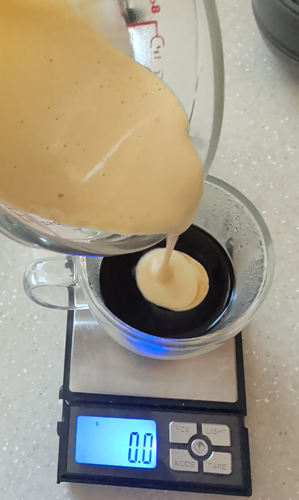
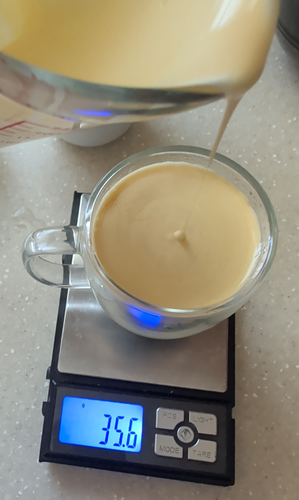
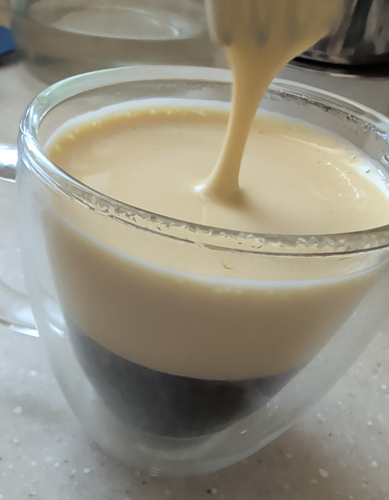
- Gently pour the egg topping over the coffee and drink while it is still hot.
- Use a spatchula to eat any remaining egg. 😋
⚠️ Reminder: STC-Hub is not responsible and assumes no liability for any illness associated with the consumption of raw or undercooked eggs. Those concerned about food safety may substitute the raw egg yolks with pasteurized egg yolks.